
Listening: The Difference Between Hearing and Understanding
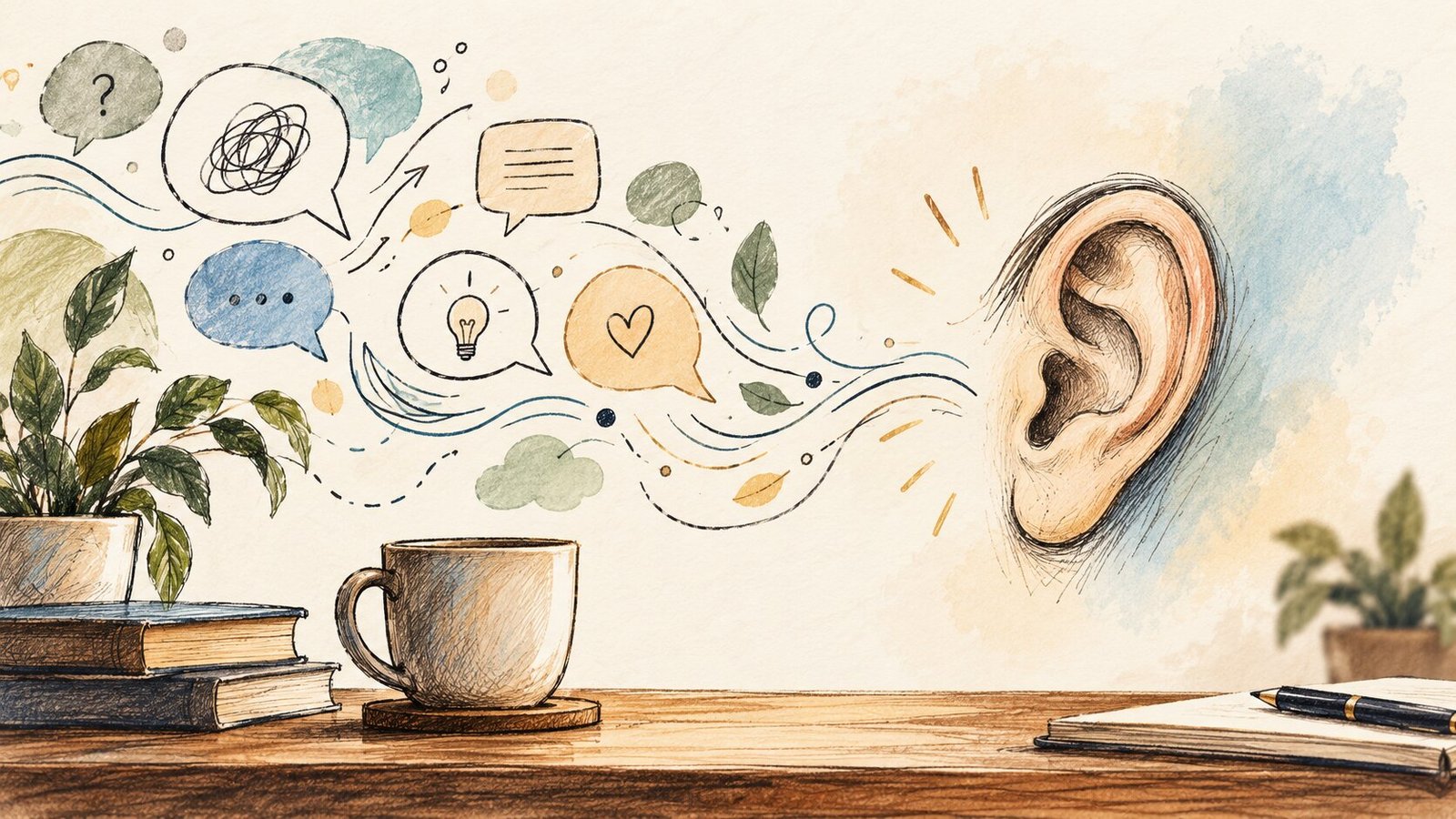
Most of us would say we’re good listeners. We hear what people say, follow the conversation and respond when it’s our turn.
But I’ve been wondering how often we listen to understand, rather than simply to respond.
Think about a conversation with a colleague, a friend or someone at home. While they’re speaking, we might already be thinking about what to say next. We form an opinion, connect their story to our own experience, or jump straight to a solution.
We may be listening to their words, but are we really listening to them?
I’ve come to appreciate how much difference genuine curiosity can make. Instead of assuming we understand, we can ask a simple question: “Tell me more about it.”
There’s no clever technique behind it. Just a genuine willingness to know more.
It means resisting the urge to interrupt, make judgements or turn the conversation towards our own experiences. It means paying attention not just to the words, but also to the tone, expressions and pauses. Sometimes, what someone is struggling to say matters just as much as what they’ve already said.
And it means being comfortable with silence. Not every pause needs to be filled.
Of course, this is easier said than done. We all bring our own feelings, experiences and assumptions into a conversation. Setting those aside, even briefly, takes practice.
One thing that helps is checking whether we’ve understood correctly. Paraphrasing what we’ve heard, or asking a follow-up question, gives the other person a chance to clarify what they meant. It also reminds us that understanding someone isn’t the same as agreeing with them.
I’ve been thinking about this in the context of coaching, too. A thoughtful question can open up a conversation, but only when it comes from genuine curiosity. Asking questions just for the sake of asking them misses the point.
Good listening isn’t about getting every conversation right. It’s about being a little more present, a little less eager to respond, and genuinely interested in the person in front of us.
These aren’t dramatic changes. They’re small, consistent actions.
But perhaps that’s where better conversations begin: not in finding the perfect thing to say, but in making the effort to understand what the other person is really saying.